The Day After
So there I was...
Watching the end of the world. Well, it was ABC's version of it. In the fall of my Senior year in high school a made for TV movie came out called The Day After. It was originally a four-hour event meant to air over two nights in November of 1983, but advertisers were so spooked by the content that ABC could barely sell the time, and it got squeezed down to a single two-hour night. Director Nicholas Meyer actually wanted it leaner, then turned around and fought the network when its censors kept cutting scenes they deemed too disturbing. Even the international theatrical cut ran about six minutes longer than what we saw at home.
And so what was all the hubbub about? The film depicts a conflict between NATO and the Warsaw Pact over Germany, and it escalates into a full-scale nuclear exchange between the United States and the USSR (now Russia). The film primarily takes place in Lawrence, Kansas, and Kansas City, Missouri, and deals with an attack of over 300 ICBMs targeting the U.S., their detonation, and the aftermath. An aftermath that includes burns and radiation sickness, looting, disease, and summary executions. The movie ends with a disclaimer that the film is fictional and an actual nuclear war would be far worse.
Over 100 million people watched the movie on its first airing, a record that still stands for a made for TV movie. 1-800 numbers with counselors standing by were set up for traumatized viewers. It was literally a cultural phenomenon that ultimately had a global impact. Reagan watched it at a private screening and wrote in his diary that it was very effective and left him greatly depressed. It changed the way he thought about nuclear war, and he later tied it to the thinking that led to the 1987 Intermediate-Range Nuclear Forces Treaty he signed with Soviet leader Mikhail Gorbachev (the movie was aired in the USSR that same year).
I do not have many recurring dreams, but for a long time I dreamt of nuclear warheads detonating over the Bay Area and trying to escape over Skyline Blvd to the coast. It was an impactful movie that changed the way the world saw the potential end of humanity. Since then, it seems every movie of that genre has tried to one-up The Day After, to the point where we may be numb to any imagined events leading up to some post-apocalyptic world. Cue Anthropic and OpenAI, who are both privately running "day after" scenario planning for the public and political backlash that would follow a catastrophic AI event.
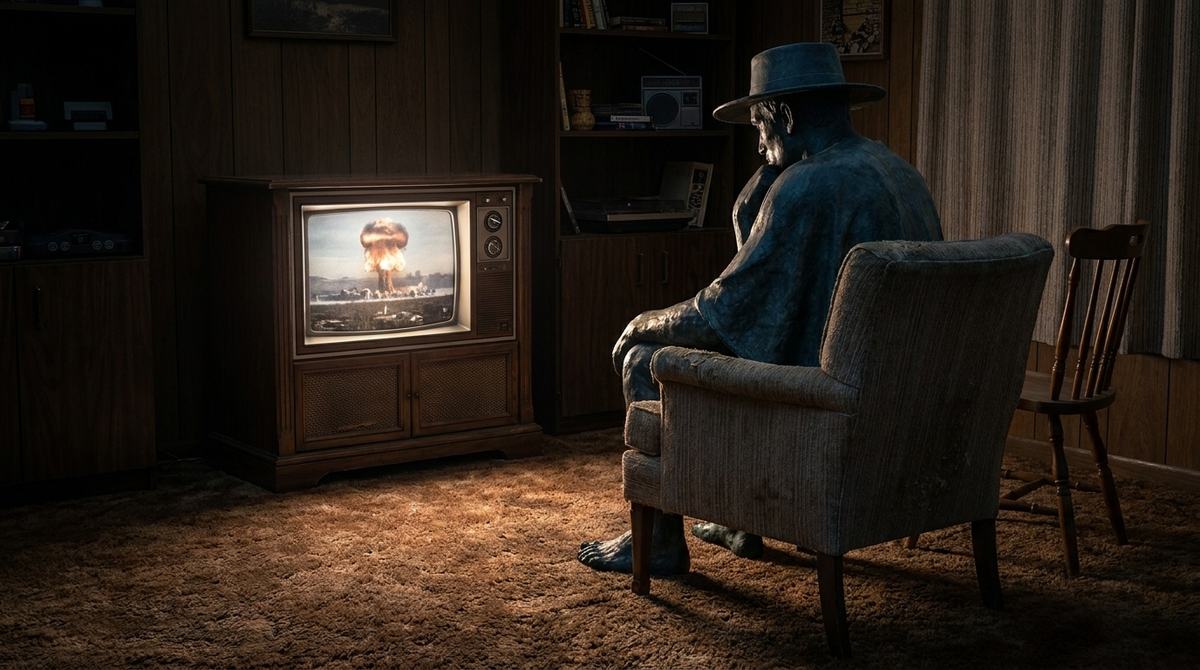
There has been a lot in the press about alarmist messaging from the labs and that this effort is a part of the hype cycle. I get it, trust is very low. But I'll just say I am glad they are doing it, I hope the output is transparent, and I hope it drives needed political and behavioral changes to identify a chair that has yet to be pulled up to the table.
So, here's what Axios actually reported that got me thinking about this. Inside Anthropic and OpenAI, people are quietly running the kind of exercise a studio runs before a disaster movie, except in this case the disaster is their own product. They are gaming out how the public and the politicians would react the day after a catastrophic AI event, the most likely version being a cyberattack that takes down financial systems, connectivity, or the power and water we all assume will be there in the morning. The uncomfortable part is not that they are imagining it, it is that by Axios' reporting a lot of the people closest to the technology think a serious incident is not a question of if but when, with some of them putting it inside the next six to twelve months. OpenAI says it runs preparedness drills and does not consider catastrophe inevitable. Anthropic declined to comment.
Here is why that sent me back to 1983. The Day After did not change the world because it was a good movie. It changed the world because it dragged the aftermath into the living room of the one man who could do something about it, The Gipper. Reagan did not need the body count explained to him, he had the DoD briefings. What he had not done was feel it. His career began in movies, and this movie put him in the rubble for two hours, and a man who had spent his life as a Cold Warrior walked out and started down a road that ended with him negotiating with Gorbachev the end to a whole class of nuclear weapons. That is the good version of a day-after exercise. You stare hard at the worst day, and it changes what you do on all the days before it.
I am not going to fault the labs for running these drills. War-gaming your own catastrophe is what responsible people do, and I have spent a career begging organizations to do exactly this instead of finding out live. If Anthropic and OpenAI are truly staring at their own rubble, good. That is more honesty than most industries manage.
But The Day After only worked because a hundred million people watched it at the same time. The whole point was that it was public. The power was not in the scenario, it was in all of us having to look at it together and then look at our leaders and ask what they were going to do about it. A day-after drill that lives inside a company, shared only with the members of Congress it is trying to shape, is the opposite of that. It is the rubble screened for an audience of one, behind closed doors, with the lights down. If the output never reaches the rest of us, it stops being a warning and becomes a hedge, a way to have the talking points ready rather than a way to change course.
I get the cynical reading of this, and I even understand it. Trust in these companies is deservedly thin, and some of this does rhyme with the alarmism that conveniently also sells the product and shapes the rules in the labs' favor. Believe a catastrophe is inevitable in a year and you can use that belief two ways. You can slow down, or you can sprint toward the thing you say is coming while rehearsing your apology. Which one it is will show up in whether any of this becomes public and actionable, or stays a private war-game.
Which brings me back to the chair I am saying has not been pulled up to the table, because that is exactly it. Right now the day-after planning has people in two seats. One is drafting the crisis response, and one is on the Hill getting ahead of the legislation. Both of those are real, and neither of them is the seat that matters most. The missing chair is the one where somebody is empowered to look at an inevitable-sounding timeline and decide, out loud and in advance, what we are and are not willing to ship to get there. That chair does not belong to Anthropic or OpenAI alone, and it does not belong to a committee that only convenes after the water stops running. It belongs to all of us, and it is still sitting pushed up against the far wall.
The Day After did not stop at scaring people. It moved the person in power to pull a chair up to a table in Geneva and do the thing that looked impossible in the years prior. That is the whole hope here. Not that the labs imagine the worst day, but that they show the rest of us what they saw, and that it moves somebody with the authority to act to sit down before the day after becomes today. Run the drill. Then turn on the lights and let a hundred million of us watch. That is how you fill the chair.
Source: Scoop: AI companies plot "the day after," Axios
#AI #AISafety #AIGovernance #Anthropic #OpenAI #TheDayAfter #Accountability #TheEmptyChair #STIW