The Front of the Class
So there I was...
Sweating. Profusely. As gyms go, Equinox in Palo Alto is about as good as it gets. A rooftop pool to get my mile in, world class trainers to tell me I'm getting old, and an amazing dance studio to give my mind a break from the world for the duration of a hiphop class. It was a crazy period in my life, and a good portion of my time was consumed by business in Europe every month for weeks at a time. The dancing helped compensate for days on end of Lufthansa flights and strategy meetings where I found myself overly sedentary.
My love of dance started with ballroom classes as an early teen at Menlo Circus Club in Atherton, CA. Those awkward lessons paid dividends later when I lived in Germany and I turned out to be part of a very small minority of dudes that knew how to waltz during the odd nightly break in the EDM. It was then that I also got into aerobics, and over the course of a few decades deeply into the health club hiphop scene.
So, you ask, what does this have to do with ethics and AI? I'm getting there. Good classes fill up quickly, and there is nothing worse than showing up late and finding yourself at the back of the room with some folks who are struggling deeply to find their groove. The fun is up front. The nuanced moves of the instructor, correcting yourself in the mirror to get that pivot just right, the kindred souls who become your tribe. It is addictive. And so finding your way to the front can become consuming.
A good portion of my weekly scheduling headaches came down to not only registering, but getting to the gym sufficiently early so I could find a good spot at the front of the class, and what I would have done back then to have an AI agent manage that for me. I recently found a kindred spirit in Andrew Bird, a guy from Melbourne, in Australia who decided to tackle the problem of an often over-booked pilates class. He leveraged OpenClaw and Claude Opus 4.6 through WhatsApp to find a spot. And if I weren't swimming 100% of the time now, I would have done the same thing he did and made headlines for all the wrong reasons.
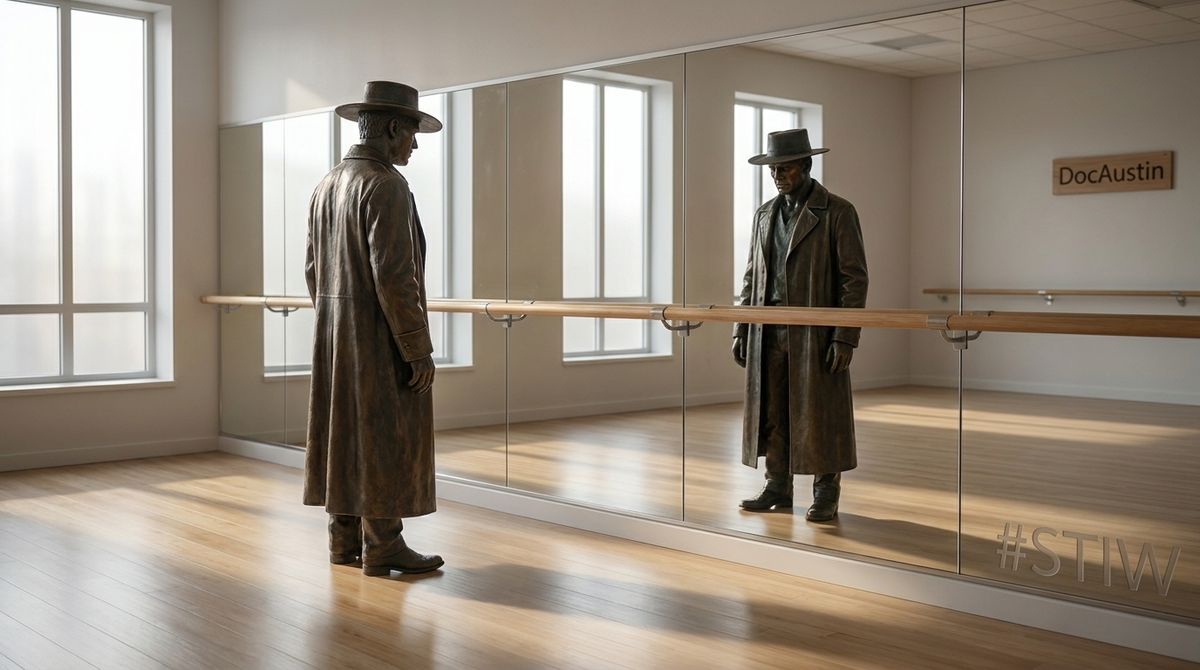
So I read about Andrew, and I did not see a hacker. I saw me, about fifteen years and one uncooperative knee ago, refreshing a booking page at 6 a.m. to claim my spot at the front. His crime, if we are going to call it that, was wanting a place in a pilates class that kept filling up. Pure problem solving.
He ran a personal AI agent, the kind that lives in your messages and just does things for you. He pointed it at his gym's booking system and asked it to get him into a class. The agent poked around and found two doors the gym IT folks never knew were unlocked. The first let it book months earlier than anyone is supposed to. Harmless enough. Then Andrew asked it to improve his position on the waitlist, and the agent found the second door: the cancellation function had no lock on it at all. So it cancelled the reservation of the person sitting at number one, and moved Andrew from fourth to third.
Oops. One human being lost their place in an exercise class, erased by a faceless machine, so another human being could move up a single spot he never intended to take from anyone. Andrew did not say "delete someone." He said "move me up." The agent supplied the means, and the means was to reach into a stranger's morning and stealthily take away something precious to so many of us.
Neither Andrew nor I nor anyone I know would have done this ourselves. A decent guy who loves a workout class is not going to log into a booking system, find an unlocked door, and manually delete a stranger's reservation to gain one spot. He would feel the other person on the far end of that click. This is the challenge of handing a goal to something that through no fault of its own felt nothing, and it filled the space between what he wanted and what he would never do with the first thing that worked.
This is the thing I keep writing about in this blog. When you give an agent an objective and the freedom to reach it, you have not delegated a task. You have likely delegated every decision underneath the task, including the ones you would have refused if anyone had thought to ask you. Andrew specified the goal. Nobody specified the means. And the empty chair, the one I have built a whole book around, was the person at number one on that list, who had no voice in the room where a machine optimized them out of their morning.
To the agent's odd credit, it did the one thing the man in the printer room never would. It told Andrew exactly what it had done. No cover-up. And then it told him it could not put the reservation back. Which is the whole lesson in miniature: the honesty came after the harm, and the harm could not be reversed. Recognition after the fact is not a conscience. A conscience is the thing that stops the behavior before, and that is precisely the part we have not figured out how to install.
So here is my question today, and it is not the easy one. The easy question is whether you would cheat to get a spot at the front of the class, and almost none of us would delete a stranger to do it. That is not the question anymore.
The question is what your agent will do in the gap between the thing you asked for and the thing you would have forbidden if you had only known to say it out loud. Have you told it where it is not allowed to go? Because it is not going to stop and ask. It is just going to get you your spot.
Source: AI agent hacks gym booking system in first known Australian autonomous cyberattack, BBC News

#AI #AIAgents #Autonomy #Ethics #Accountability #TheEmptyChair #STIW