The Maker's Mark
So there I was...
This morning I was reading a press release on the back patio, towel still around my neck from the morning mile, watching two hummingbirds fight a border war over the feeder like it was the last nectar in Texas. My wife had beaten me out of the pool by two lengths, which is normal, and had the coffee going, which is mercy. The press release was from Brussels, and it was about watermarks.
Not the kind I care about most mornings. The European Commission has published something called the Code of Practice on Transparency of AI-Generated Content, finished on June 10 after a drafting process that started last September: providers of generative AI, the people who build detection tools, deployers, academics, civil society, all of them in rounds of plenaries since November. It exists to serve Article 50 of the EU AI Act, and the timing matters, because the transparency obligations in that article stop being theoretical on August 2, 2026. That is three weeks from now.
Here is what it actually asks, in plain terms. If you build generative AI, your system's output, the audio, the images, the video, the text, should carry a machine-readable mark that says what it is, a mark built to be effective, interoperable, robust, and reliable. If you deploy generative AI, you disclose deepfakes, and you disclose AI-generated text published on matters of public interest, unless a human editor has reviewed it and taken responsibility. There is even a standardized set of icons so the label looks the same in Lisbon as it does in Helsinki. The code is voluntary; signing it buys a company legal certainty and less paperwork across twenty-seven member states. The Commission and the AI Board have blessed it as an adequate way to show compliance.
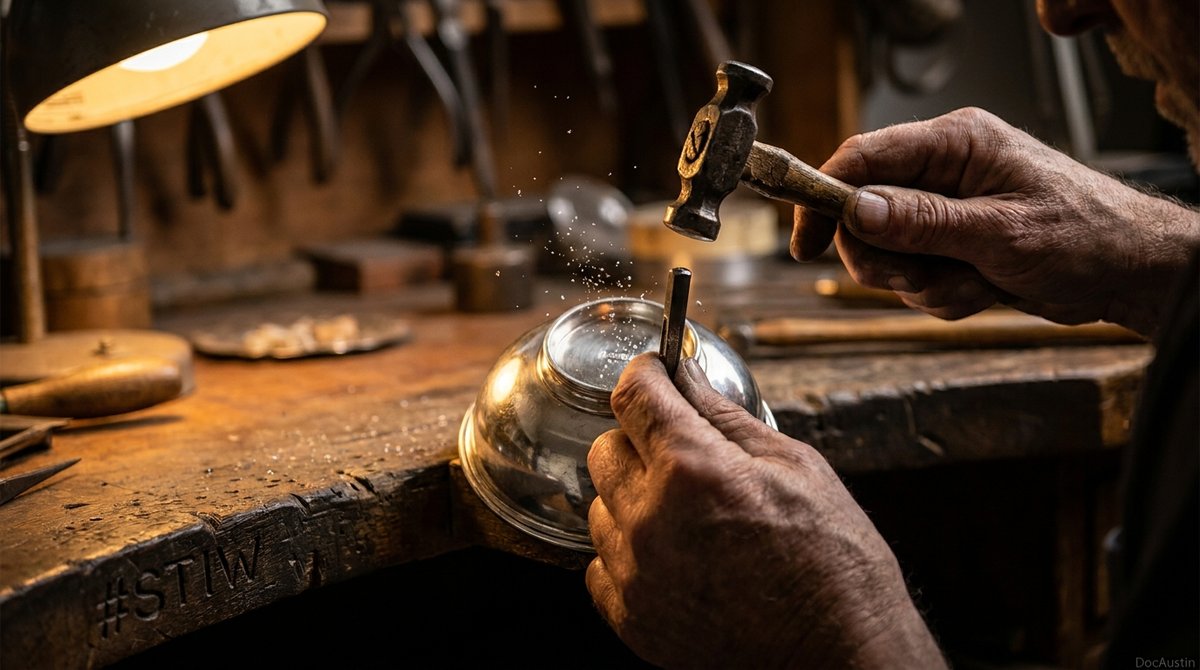
Reading all this, I kept looking at the bottom of my own blog page. Every story I publish here carries a mark: a logo, a link, a hashtag. Nobody in Brussels made me do that. I do it for the same reason a silversmith stamps the bottom of a bowl and a foundry chisels its name into the base of a bronze: a mark says I made this, and I am willing to be found. For most of human history the mark was the whole system of trust. You did not need to know how the bowl was made. You needed to know who would stand behind it.
And I will make no secret of it: a machine helps me build this blog, sourcing new ethics and AI news content, generating graphics, keeping my content tight, and the actual posting to my blog. It is an invaluable productivity tool. The mark at the bottom is still mine, because the judgment is. That, I think, is exactly the line the Europeans are trying to draw, and why the editorial-review exception is the most interesting sentence in the whole code. A label that says "a machine made this" and a signature that says "a human stands behind this" are answering two different questions, and we are about to find out how much the second one still matters.
Of course there is a catch, and it is the obvious one. The people manufacturing deepfakes to move an election or empty a retiree's savings account are not lining up to adopt a standardized icon set. A voluntary mark binds only the people willing to be seen. The counterfeiters never stamped their silver either. But that was never the point of the maker's mark. The point was to separate, cleanly and publicly, the people who would say out loud what they made from the people who would not, so that silence itself became information.
So here is my question for you this morning, and it is not really about Brussels. Look at what you shipped this month: the reports, the proposals, the code, the posts. If every one of them had to carry a mark saying exactly how it was made, and exactly who stands behind it, would you change anything?
And if you would, what does that tell you?
Source: Code of Practice on Transparency of AI-Generated Content, European Commission

#AI #AIAct #Transparency #Deepfakes #ContentAuthenticity #STIW