The Ink Wasn't Dry
So there I was...
This time it was lunch. I want the record to show that I nearly made it through a whole news cycle like a civilized man, and then, halfway through a brisket taco at my own kitchen counter, I read the headline and inhaled part of it. My wife looked up, less concerned than curious, because what came out of me between coughs was German. I speak it, and I save it for occasions that English cannot carry with dignity. "Verdammt noch mal" is what the occasion got. Mild, by German standards. The dog left the room anyway.
Three days ago, in this very spot on the internet, I wrote about the maker's mark. The European Union had finished its Code of Practice on labeling AI-generated content, and I told you the obligation behind it, Article 50 of the AI Act, would stop being theoretical on August 2, 2026. Three weeks away, I said. It seemed like a fact. It had a date and everything.
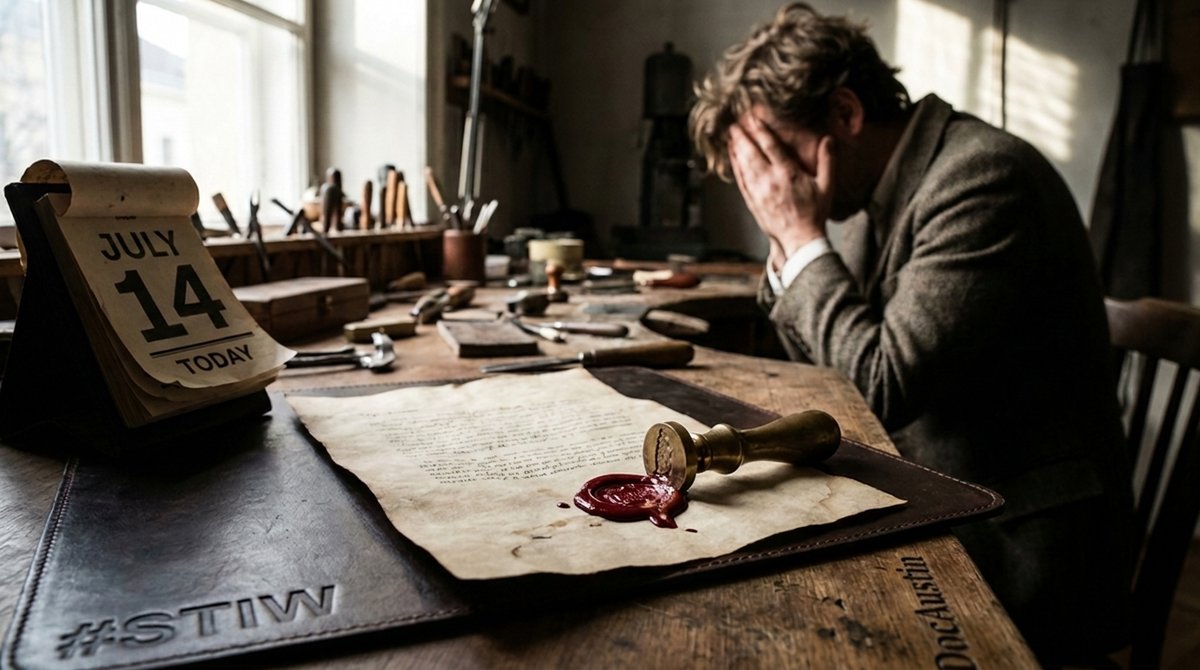
The headline that interrupted my taco: EU nations have approved a provisional deal to roll the AI Act back. The watermarking obligation I wrote about gets a grace period, so the mark that was due August 2 is now due December 2. The bigger rollback is behind it: the rules for high-risk AI systems, originally set for this August, slide to December 2027, sixteen months later, and the version for AI inside regulated products slides to August 2028. Industrial AI gets exempted from scrutiny outright. Assistant tools get lifted out of the high-risk category. The deal still needs the European Parliament's formal blessing, expected before August, which means the deadline will likely be repealed a few days before it would have existed.
The quotes are their own genre. MEP Arba Kokalari: "With this agreement, we show that politics can move just as quickly as technology." Commission President Ursula von der Leyen praised "a simple, innovation-friendly environment." Meanwhile Amnesty International and a chorus of civil liberties groups are calling the whole simplification package a rollback of rights written under industry pressure, and researchers have spent months documenting how heavily the biggest technology companies lobbied for exactly this.
Now, honesty requires me to give Brussels its due, because there is a version of this that is just good carpentry. The technical standards the high-risk rules depend on were late. The Code of Practice explaining how to actually do the watermarking was only finished in June, weeks before the August deadline, and I built a pergola recently, so I know you do not hang the roof on posts that have not set. If the enforcement machinery genuinely was not ready, delaying is the responsible move, and the people saying so are not all cynics.
But here is what stayed with me after the coughing stopped. The mark itself did not change. Nobody stood up in Brussels and said the mark was wrong, that content should not say what it is, that makers should not be findable. They only moved the date. And a date that moves the first time serious pressure arrives was never really a date. It was an opening position. In my backyard we have two kinds of lines: string lines, which exist to be adjusted, and posts in concrete, which exist so that everything else can lean on them. The whole art of building anything is knowing which is which before the wind picks up, because the wind always finds out.
That is the part that travels beyond Brussels, and the reason this belongs on your desk and not just in a policy newsletter. Every leader I know has announced a standard with a date on it. A quality bar. A hiring principle. A security requirement. An ethics line. And every one of those standards eventually meets its lobbying season, the quarter when the pressure shows up dressed as reasonableness and asks for four more months. Some of what you built turns out to be concrete. Some of it turns out to be string. The people around you are keeping score either way, and they learn more from one moved date than from ten speeches.
So here is my question for you this lunch hour, between careful bites. Think of the standard you are proudest of announcing, the one with your name near it. When its pressure arrives, and it will arrive, is that line set in concrete?
And if it moves, what did everyone watching just learn about the rest of your lines?
Sources: EU Nations Approve Deal to Roll Back AI Restrictions, AI Business · EU AI Act Omnibus Deal Reached, William Fry

#AI #AIAct #AIGovernance #TechPolicy #Leadership #STIW